When a Cloud Misconfiguration Costs $190 Million: Ethical Lessons from the Capital One Breach
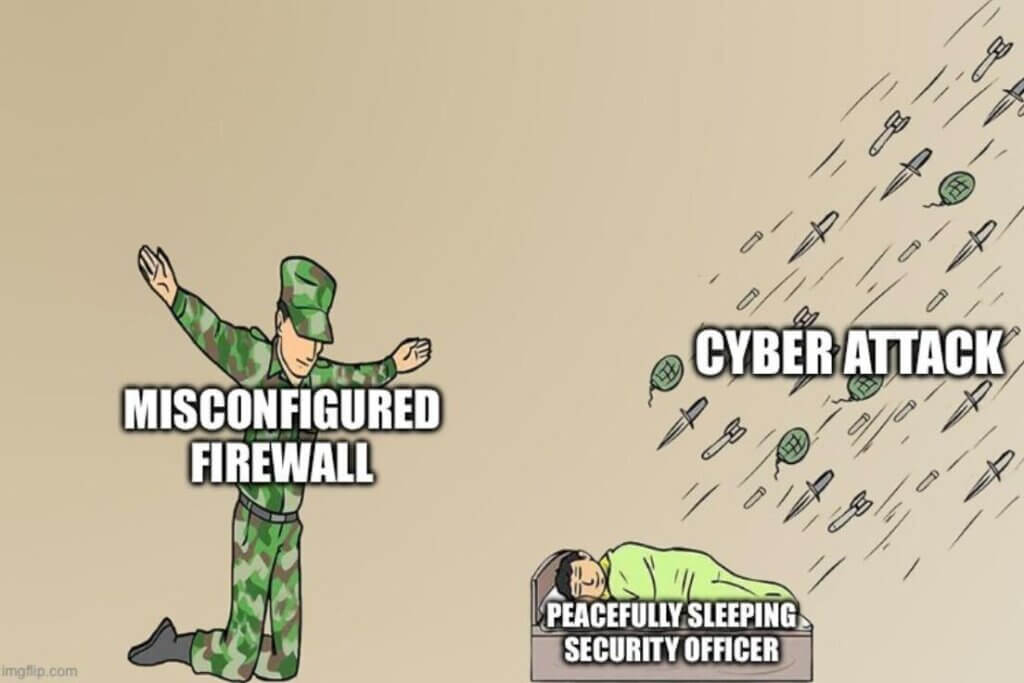
In July 2019, a former Amazon Web Services (AWS) employee discovered a misconfigured firewall in Capital One's cloud infrastructure. The resulting breach affected over 100 million customers and led to a $190 million settlement. More importantly, it exposed fundamental failures in cloud security that could have been prevented if engineers adhere to code of ethics framework such as ACM.
The Anatomy of a Breach
The assumptions around the Capital One breach believe the root cause was a misconfigured firewall setting. However, the technical reality was more complex, and the attack sequence exposed control failures.
The attacker, Paige Thompson who is a former AWS employee, used
TOR and VPN services (specifically IPredator end nodes) to access Capital
One's cloud network between March and July 2019. The initial entry point was
Capital One's Web
Application Firewall (WAF), specifically, an open-source ModSecurity WAF
running on an AWS EC2 instance.
However, unlike many initial reports suggested, this was not
a typical Server Side
Request Forgery (SSRF) attack. AWS officially
clarified that the attack was an open reverse
proxy attack, where a misconfigured application was leveraged to query
internal networking resources. In this reverse proxy attack, the WAF being deployed in reverse proxy mode, became the vector rather than the application behind it.
Think of Capital One's cloud infrastructure like a corporate headquarters with multiple security layers. The WAF was supposed to
act like the security desk at the main entrance, carefully checking every
visitor's credential before allowing them into specific areas of the building.
The reverse proxy deployment was like having a security guard who not only
checks IDs but also escorts visitors to their destinations.
However, the misconfiguration in the WAF was similar to
accidentally set this security system to trust anyone wearing a company
badge, without verifying if the badge's authenticity. The attacker exploited this
trust by creating a fake employee badge that the system
automatically accepted.
What made this attack devastating was how it
cascaded through multiple security layers. Let’s circle back to our analogy:
once past the main security desk with a fake badge, the attacker didn't just
gain access to the lobby; they found themselves with a master
key card that opened every door in the building, including the vault containing
sensitive documents. And this vault is the multiple databases that contain
compromised data consist of over 140,000 Social Security numbers, 80,000 bank
account numbers,1 million Canadian Social Insurance numbers, as well as credit
card application data spanning 14 years.
Where Technical Architecture Meets Ethical Obligation
The ACM Code of
Ethics emphasizes that computing professionals must "contribute to
society and to human well-being, acknowledging that all people are stakeholders
in computing." In cloud computing, this ethical obligation extends beyond
technical compliance.
The Capital One breach reveals five distinct control
failures show critical
ethical lapses according to the ethics framework:
- Reverse
Proxy Misconfiguration: The ModSecurity WAF's reverse proxy deployment
contained a critical misconfiguration. This violates the ACM Code's
principle 2.5 on "giving comprehensive and thorough evaluations of
computer systems and their impacts."
- Cloud
Infrastructure Weakness: The AWS metadata
service (IMDSv1) inherently trusted API requests from EC2 instances
without additional verification. This architectural decision reflects the ethical question about trust relationships in cloud systems, relating to principle 2.9 on "designing and implementing systems
that are robustly and usably secure."
- Excessive IAM Permissions: The Identity and Access Management (IAM) role attached to the WAF instance had unnecessarily broad privileges, including access to S3 buckets containing sensitive data. This violation of the principle of least privilege demonstrates a failure in ethical system design, which also contradicts principle 2.9.
- Inadequate Data Protection: While the data was encrypted, the same compromised identity could access both the data and the decryption capabilities. This violates principle 1.7 of the ACM Code, which requires professionals to "respect the privacy of others." and should have safeguards regarding private data access.
- Monitoring System Failures: The breach remained undetected for months despite the attacker downloading approximately 30GB of data (700 S3 buckets). This represents a failure in the ethical obligation under principle 2.1 to "strive to achieve high quality in both the processes and products of professional work" as it does not have secure pipeline and frequent system monitoring.
Analysis and Understanding the System
The ACM Code of Ethics emphasizes in principle 2.2 that
professionals must "maintain high standards of professional competence,
conduct, and ethical practice." In cloud environments, this principle
takes on added complexity due to the interconnected nature of cloud services.
The attack sequence reveals the importance of comprehensive
system understanding:
- The
misconfigured firewall allowed initial access
- This
access enabled the retrieval of temporary credentials
- These
credentials permitted access to the metadata service
- Metadata
service access opened paths to broader AWS resources
- Finally,
sensitive data could be extracted from storage buckets
Each step in this chain represents a point where deeper
analysis and ethical consideration could have prevented the breach. It's
similar to understanding not just how each security camera in a building works,
but how the entire security system functions as a whole.
According to research by cloud security experts, the Capital One breach exposed a critical gap in professional competence regarding cloud-specific vulnerabilities. This gap represents a failure to follow principle 2.2 of the ACM Code.
A study
published in IEEE Security & Privacy analyzing cloud security incidents
found that misconfigurations account for 65-70% of cloud security failures,
highlighting the critical importance of ethical aspects in software engineering that
the ACM Code emphasizes.
Lessons learned
This proves to us that the closer organizations stay to the ACM Code of Ethics, the more secure their systems will be. Security architecture should consider not just individual components but also their interactions. The Capital One breach demonstrates how minor misconfigurations can cascade into major vulnerabilities through system interactions, aligning with ACM principle 3.7 on recognizing when a computer system is becoming integrated into the infrastructure of society. Furthermore, IAM roles should have been designed with separate responsibilities as access to a service shouldn't automatically grant access to sensitive data, which fulfills ACM principle 1.2 on avoiding harm to others and allows for easier quarantines when the system is compromised. Finally, the system should include robust monitoring and detection capabilities. The months-long data exfiltration should have triggered numerous alerts, which follows ACM principle 2.5 on "giving comprehensive and thorough evaluations of computer systems."
Moving Forward
The Capital One breach serves as a reminder that technical excellence and ethical responsibility are inseparable in modern software engineering. Every architectural decision, from IAM role design to monitoring system configuration, has ethical implications that ripple throughout the system.
For cloud-native organizations, this means developing a
deeper understanding of how technical architectural choices reflect and impact
our ethical obligations to protect user data. Security is more than a technical challenge but an ethical imperative
that shapes every aspect of a system.
By learning from the Capital One breach and applying the
principles of the ACM Code of Ethics, we can work toward cloud architectures
that are not just technically sound but ethically built. The future of cloud
security lies not just in better tools or more layers of defense, but in a
fundamental recognition that every technical decision is also an ethical one.
This work is licensed under a Creative Commons
Attribution-NonCommercial-ShareAlike 4.0 International License.


Comments
Post a Comment